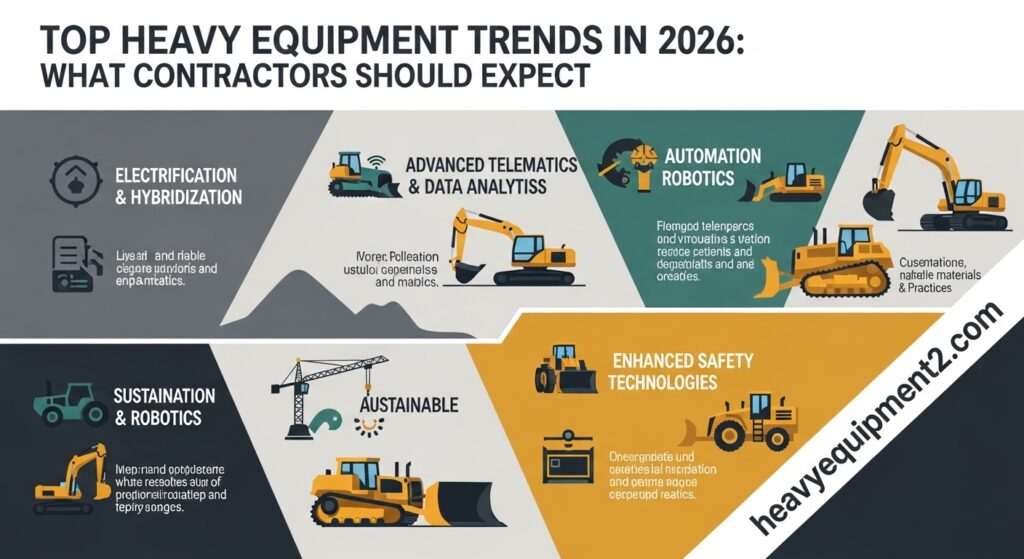
The construction and heavy machinery industry is evolving faster than ever. Rising fuel costs, stricter environmental regulations, labor shortages, and rapid technological innovation are reshaping how contractors operate.
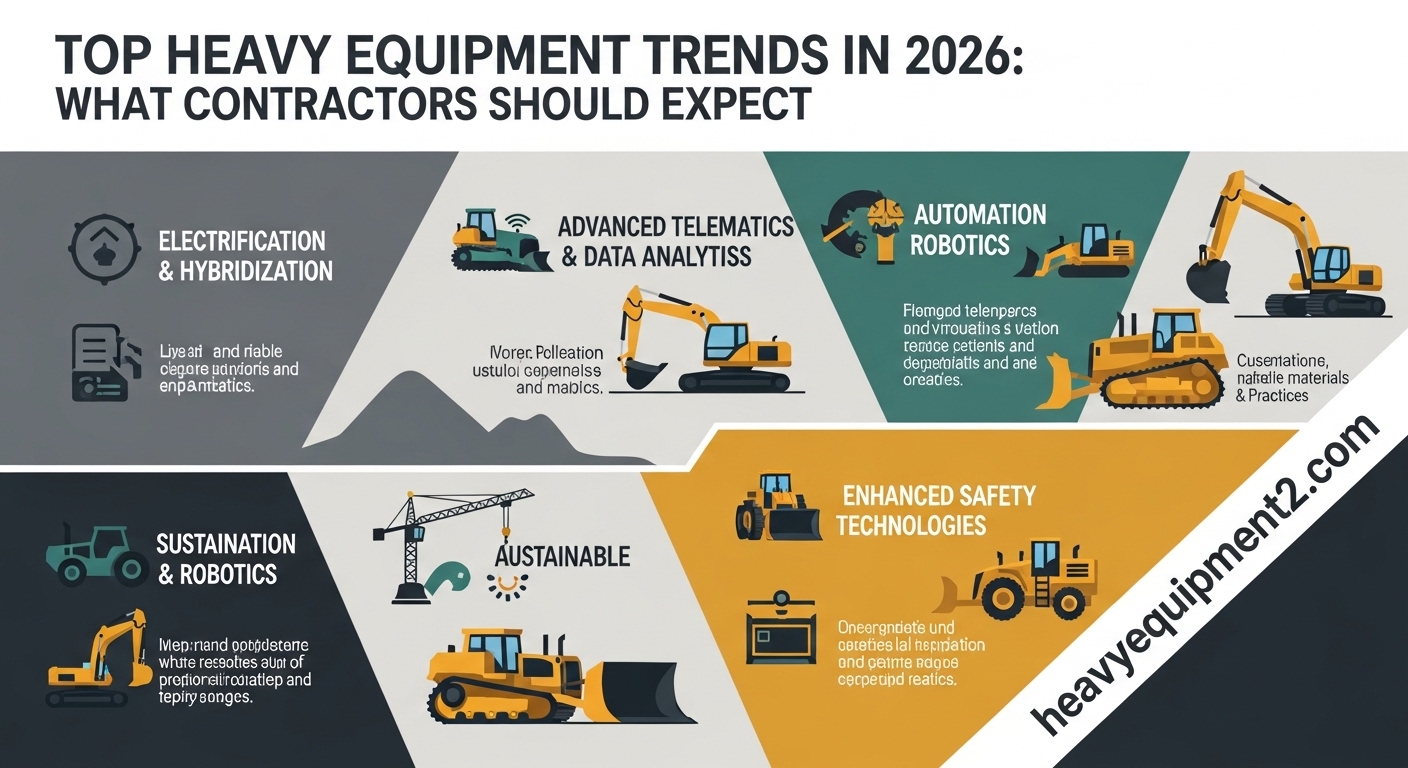
In 2026, heavy equipment is no longer just about horsepower and steel — it’s about efficiency, sustainability, automation, and data-driven decision-making.
If you are a contractor, fleet manager, or construction business owner, understanding these trends will help you stay competitive, reduce operational costs, and maximize project profitability.
1️⃣ Electrification of Heavy Equipment
One of the biggest shifts in 2026 is the rapid adoption of electric and hybrid construction machinery.
Manufacturers like Caterpillar, Komatsu, and Volvo Construction Equipment are investing heavily in battery-powered excavators, loaders, and compact equipment.
Why It Matters:
-
Lower fuel costs
-
Reduced carbon emissions
-
Quieter job sites (ideal for urban projects)
-
Compliance with stricter environmental regulations
Although electric heavy machinery still carries a higher upfront cost, long-term savings on fuel and maintenance are making it increasingly attractive for contractors.
Expectation for 2026:
More mid-sized electric machines will enter the market, making electrification viable beyond compact equipment.
2️⃣ Automation and Semi-Autonomous Machinery
Automation is no longer futuristic — it’s practical.
Semi-autonomous bulldozers, excavators with grade control systems, and GPS-guided machinery are becoming standard on large construction projects.
Key Benefits:
-
Increased precision
-
Reduced operator fatigue
-
Lower material waste
-
Faster project completion
Automation helps solve one of the industry’s biggest challenges: skilled labor shortages. Machines that assist operators reduce the need for highly specialized expertise while maintaining high productivity.
Expectation for 2026:
More contractors will adopt assistive automation rather than fully autonomous fleets, due to cost-effectiveness and ease of integration.
3️⃣ Telematics and Fleet Management Technology
Data is now one of the most valuable assets in construction.
Telematics systems allow contractors to:
-
Track equipment location
-
Monitor fuel usage
-
Detect maintenance needs
-
Improve asset utilization
Leading manufacturers integrate proprietary telematics platforms directly into their equipment. This allows real-time performance monitoring and predictive maintenance scheduling.
Why Contractors Should Care:
Unplanned downtime is expensive. Predictive maintenance reduces unexpected breakdowns and improves ROI on equipment investments.
Expectation for 2026:
Fleet management dashboards will become more user-friendly and AI-powered, offering predictive insights instead of just raw data.
4️⃣ Sustainable and Eco-Friendly Machinery
Governments worldwide are tightening environmental regulations. Sustainability is no longer optional.
Trends include:
-
Low-emission diesel engines
-
Hybrid power systems
-
Biodegradable hydraulic fluids
-
Recyclable machine components
Green construction certifications are becoming more common in large infrastructure and commercial projects. Contractors who invest in eco-friendly equipment gain a competitive advantage when bidding.
Expectation for 2026:
Environmental performance will influence purchasing decisions almost as much as price and power.
5️⃣ Advanced Safety Technologies
Safety continues to be a top priority in heavy equipment operations.
Modern machinery now includes:
-
360-degree cameras
-
Collision avoidance systems
-
Operator fatigue monitoring
-
Blind-spot detection
These features reduce accidents, protect workers, and lower insurance costs.
Why This Trend Is Growing:
Construction site incidents are costly — financially and legally. Smart safety systems help contractors minimize risk while maintaining productivity.
Expectation for 2026:
Safety tech will move from being a premium add-on to a standard feature in most mid-to-large machines.
6️⃣ Rise of Equipment Rental Over Ownership
Another major trend is the increasing preference for renting instead of buying heavy machinery.
Reasons:
-
Lower upfront capital investment
-
Flexibility for short-term projects
-
Access to newer technology
-
Reduced maintenance responsibility
With rapid innovation cycles, renting allows contractors to use the latest equipment without long-term depreciation risks.
Expectation for 2026:
More hybrid models will emerge — partial ownership combined with short-term rentals for specialized machinery.
7️⃣ Smart Job Sites and Connected Construction
The concept of the “smart construction site” is gaining momentum.
Integration between:
-
Drones for site mapping
-
GPS-guided equipment
-
Project management software
-
Real-time progress tracking
This digital ecosystem improves coordination between operators, project managers, and stakeholders.
Benefits:
-
Better project scheduling
-
Reduced delays
-
Improved cost estimation accuracy
-
Enhanced communication
Expectation for 2026:
Cloud-based project integration will become standard practice for medium and large contractors.
What Contractors Should Do in 2026
To stay competitive, contractors should:
✔ Evaluate electric or hybrid equipment options
✔ Invest in telematics and predictive maintenance tools
✔ Upgrade to machinery with advanced safety features
✔ Consider rental strategies for specialized equipment
✔ Train operators on smart technologies
Adapting early can reduce costs, increase efficiency, and improve bid competitiveness.
Final Thoughts
The heavy equipment industry in 2026 is defined by technology, sustainability, and data-driven efficiency.
Contractors who embrace electrification, automation, and smart fleet management will gain a measurable advantage in productivity and cost control. Meanwhile, those who delay adoption risk higher operational costs and reduced competitiveness.
Heavy machinery is no longer just about power — it’s about intelligence, integration, and innovation.
Leave a Reply