

The construction and industrial sector is rapidly evolving, and electric heavy equipment is at the forefront of this transformation. From electric excavators to battery-powered forklifts, companies worldwide are exploring cleaner, more efficient alternatives to traditional diesel-powered machines. But while electric machinery promises significant advantages, it also comes with unique challenges that every business must consider before adoption.
Benefits of Electric Heavy Equipment
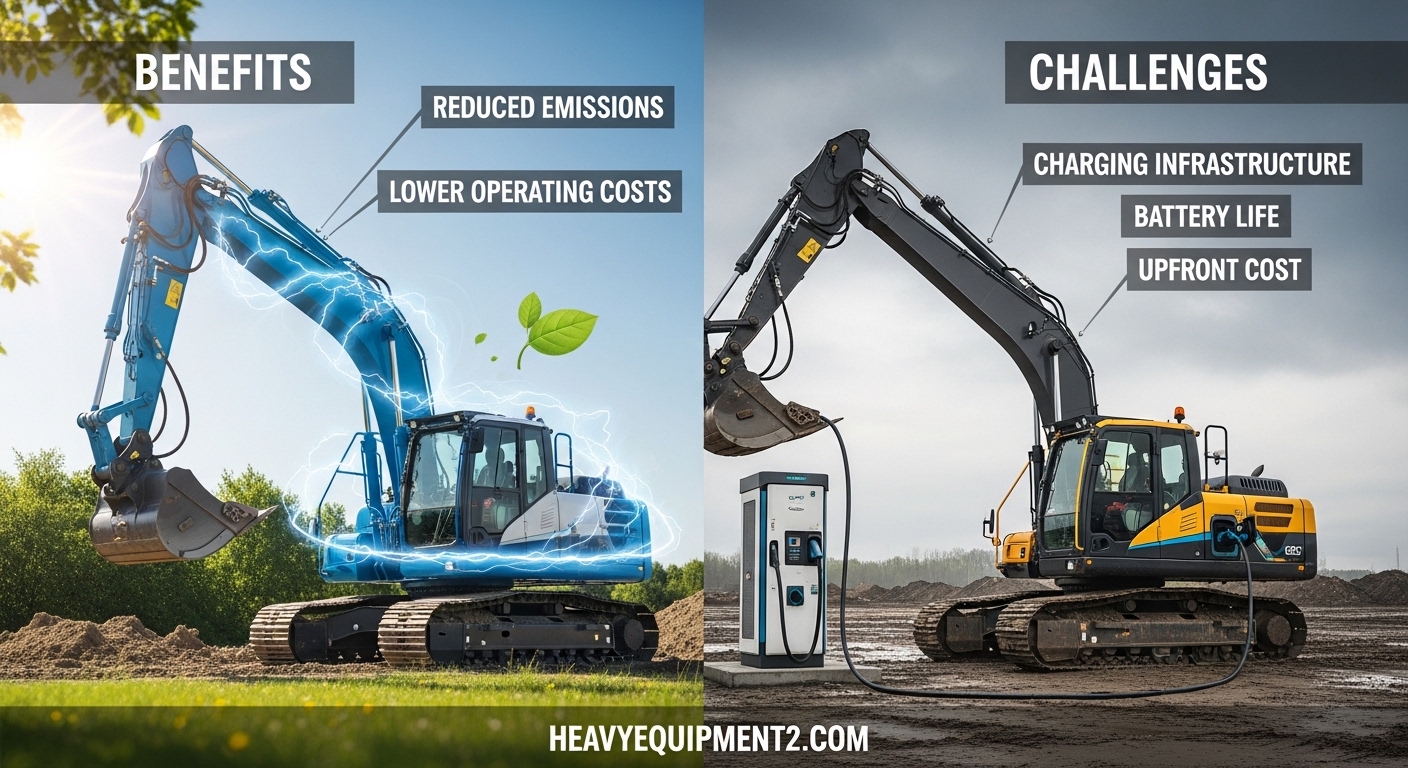
1. Lower Operating Costs
Electric machines have fewer moving parts than diesel engines, resulting in reduced maintenance costs. There is no need for oil changes, fuel filters, or complex exhaust systems, which can save thousands annually for construction companies.
2. Environmentally Friendly
Electric equipment produces zero tailpipe emissions, reducing air pollution and carbon footprint. For urban construction projects or indoor operations like warehouses, this is a huge advantage, aligning with global sustainability goals.
3. Quieter Operation
Noise reduction is a major benefit of electric heavy machinery. Electric motors are significantly quieter than diesel engines, improving worksite safety and comfort. This is especially valuable in residential areas or enclosed work environments.
4. Energy Efficiency
Electric motors convert more energy into work compared to internal combustion engines. This means better energy efficiency and operational performance, potentially reducing energy costs per project.
5. Government Incentives
Many governments offer tax credits and grants for companies adopting electric construction equipment. This helps offset the initial investment and encourages sustainable practices.
Challenges of Electric Heavy Equipment
1. High Initial Cost
The upfront price of electric heavy machinery is generally higher than traditional diesel-powered machines. Batteries, specialized components, and limited production scale contribute to this higher cost.
2. Battery Limitations
Battery life and charging times are critical concerns. Heavy equipment requires high-capacity batteries, and long charging periods can impact productivity if not properly managed.
3. Limited Availability and Models
While the market is growing, electric heavy equipment still has fewer options compared to diesel machines. Companies may have limited choices for specific applications or machine sizes.
4. Infrastructure Requirements
Worksites must have adequate charging stations and electrical infrastructure to support these machines. This can involve additional costs and planning.
5. Performance in Extreme Conditions
Battery performance can be affected by extreme temperatures, reducing operational efficiency in very cold or hot environments. Companies must plan for seasonal variations.
Tips for Adopting Electric Heavy Equipment
-
Start Small – Test electric machines on smaller projects before committing to a full fleet.
-
Plan Charging Infrastructure – Ensure sufficient charging stations to avoid downtime.
-
Train Operators – Educate operators about best practices for electric machinery to maximize efficiency.
-
Monitor Battery Health – Implement monitoring systems to track battery life and usage patterns.
-
Stay Updated – Electric machinery technology evolves fast; keep up with the latest models and innovations.
Electric heavy equipment represents the future of construction and industrial machinery. With lower operating costs, environmental benefits, and quieter operation, it offers compelling advantages. However, businesses must carefully evaluate the initial investment, battery limitations, and infrastructure needs before transitioning. By understanding both the benefits and challenges, companies can make informed decisions, reduce costs, and contribute to a more sustainable construction industry.