


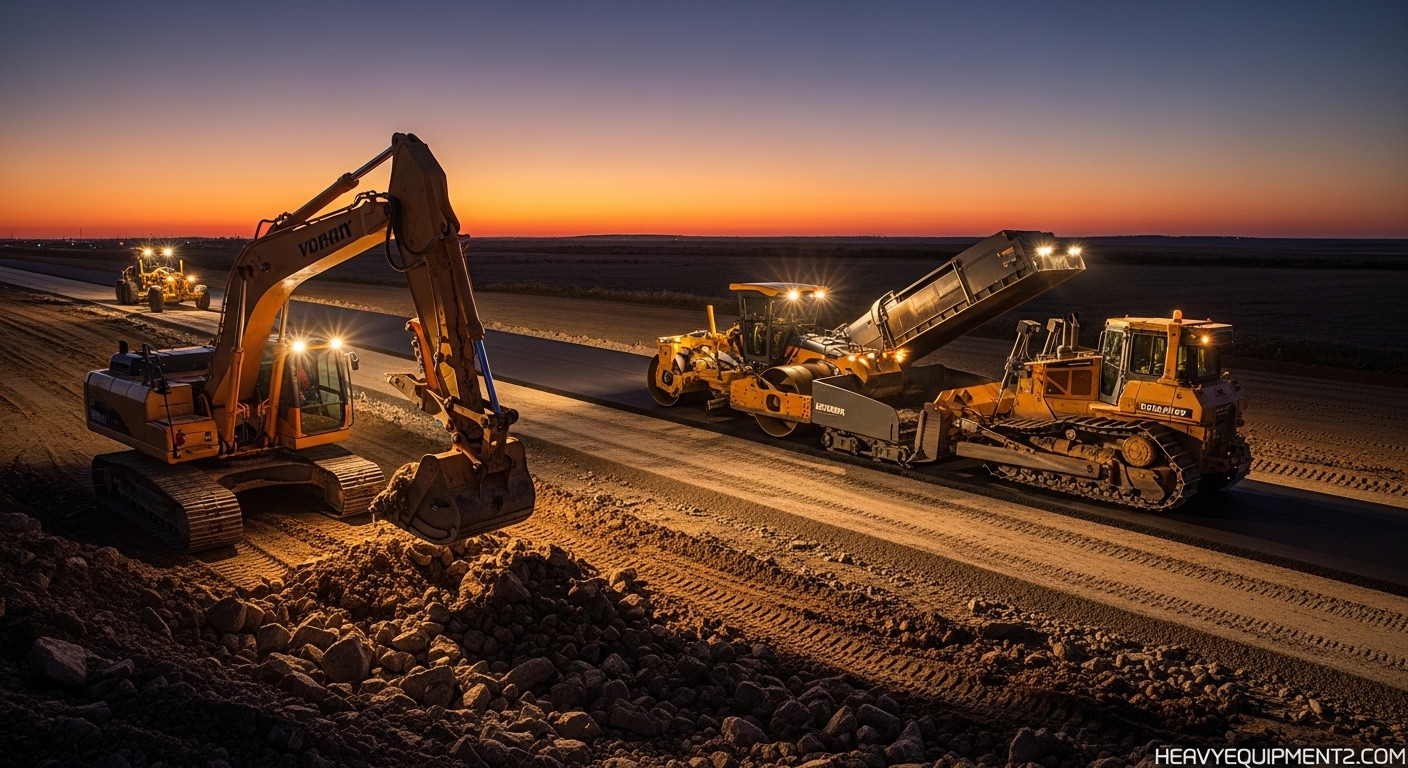
Building roads is a complex process that requires careful planning, skilled labor, and the right machinery. Heavy equipment plays a critical role in every stage of road construction, ensuring efficiency, safety, and quality. In this article, we will explore how different types of heavy equipment are used, why they are essential, and how modern technology improves the process.
1. Site Preparation
Before any paving can begin, the construction site must be prepared. This includes clearing trees, rocks, and debris, leveling the land, and creating a stable foundation. The following machines are commonly used:
-
Bulldozers: Push large amounts of soil or debris and help level the ground.
-
Excavators: Dig trenches, remove rocks, and handle soil efficiently.
-
Skid Steer Loaders: Perform smaller-scale clearing and transport materials around the site.
Using these machines ensures the site is ready for grading and paving, reducing manual labor and improving safety.
2. Earthmoving and Grading
Earthmoving is the process of reshaping the land to achieve the proper road alignment and slope. Accurate grading is critical for water drainage and long-term road durability.
-
Motor Graders: Smooth and level the soil or gravel, creating the ideal base for asphalt or concrete.
-
Dump Trucks: Transport large amounts of soil, gravel, or sand to different areas of the site.
-
Compactors/Rollers: Compress soil and gravel to create a firm, stable foundation.
Proper grading and compaction prevent future issues such as potholes, uneven surfaces, or erosion.
3. Paving
Once the base is ready, the paving process begins. This step involves laying asphalt or concrete to form the road surface.
-
Asphalt Pavers: Spread and shape asphalt evenly across the road surface.
-
Concrete Pavers: Used in areas where concrete roads are preferred for durability.
-
Rollers: Compact the asphalt or concrete to achieve a smooth, dense surface.
Modern paving machines are equipped with sensors and GPS technology to ensure precise alignment and thickness, reducing material waste.
4. Finishing Work
After paving, finishing touches are applied to ensure safety and functionality.
-
Line Striping Machines: Apply road markings, including lanes, crosswalks, and directional arrows.
-
Sweepers: Clean dust and debris from the newly constructed road.
-
Hydraulic Lifts and Cranes: Assist in installing guardrails, signs, and other roadside equipment.
These finishing steps enhance safety for drivers and pedestrians while improving the road’s aesthetic appearance.
5. Technology in Road Construction
The use of technology has revolutionized heavy equipment operations:
-
GPS & Telematics: Help operators work efficiently with real-time positioning and machine diagnostics.
-
Automation: Some graders, pavers, and rollers now operate semi-autonomously, increasing accuracy and productivity.
-
Eco-Friendly Equipment: Electric and hybrid machines reduce emissions on large projects.
Investing in modern machinery and technology not only improves efficiency but also ensures compliance with environmental regulations.
Heavy equipment is indispensable in road construction. From site preparation and grading to paving and finishing, the right machinery ensures projects are completed safely, efficiently, and on schedule. By combining skilled operators with advanced technology, construction companies can build durable roads that meet today’s infrastructure standards.