

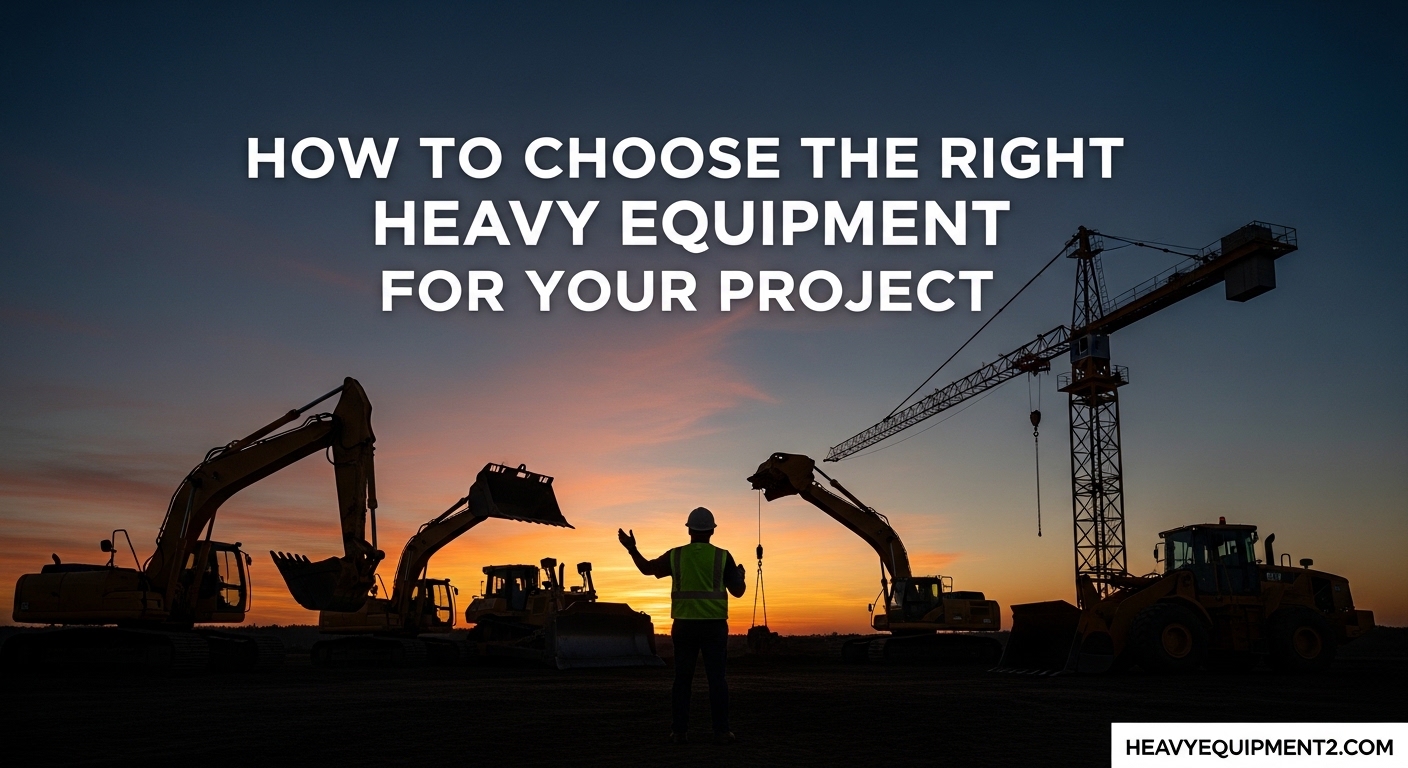
Selecting the right heavy equipment can determine whether your construction project finishes on time and within budget — or faces costly delays. From excavators and bulldozers to loaders and cranes, each machine serves a specific purpose. Choosing incorrectly can increase fuel costs, reduce efficiency, and even create safety risks.
In this guide, you’ll learn exactly how to choose the right heavy equipment for your project based on budget, project size, site conditions, and long-term operational goals.
1. Understand Your Project Requirements
Before searching for heavy equipment for sale or rental, define your project clearly:
-
What type of work will be done? (Excavation, grading, lifting, demolition)
-
What is the project scale?
-
What is the expected timeline?
-
What terrain conditions are involved?
For example:
-
Road construction typically requires graders, compactors, and asphalt pavers.
-
Large-scale excavation projects require hydraulic excavators and dump trucks.
-
High-rise construction requires tower cranes or mobile cranes.
The more detailed your project plan, the easier it is to match equipment to tasks.
2. Choose the Right Type of Machine
Different machines are designed for specific tasks. Here’s a quick breakdown:
Excavators
Best for digging, trenching, demolition, and material handling.
Bulldozers
Ideal for pushing soil, land clearing, and grading rough terrain.
Wheel Loaders
Used for moving large volumes of material quickly.
Cranes
Essential for lifting heavy materials vertically.
Selecting the correct machine type prevents unnecessary fuel consumption and mechanical stress.
3. Consider Equipment Size and Capacity
Bigger is not always better.
Oversized equipment:
-
Increases fuel costs
-
Is harder to maneuver
-
May damage compact job sites
Undersized equipment:
-
Slows productivity
-
Increases wear and tear
-
Raises labor costs
Always match:
-
Bucket capacity
-
Lifting power
-
Operating weight
-
Engine horsepower
to your project workload.
4. Evaluate Site Conditions
Terrain plays a major role in equipment selection.
Ask yourself:
-
Is the ground muddy or rocky?
-
Is the site narrow or wide open?
-
Are there height restrictions?
For example:
-
Tracked machines perform better on uneven terrain.
-
Wheeled machines are ideal for paved or firm surfaces.
-
Compact equipment works best in tight urban spaces.
Choosing equipment based on terrain reduces maintenance costs and improves safety.
5. Decide Between Buying and Renting
This is one of the biggest financial decisions in construction projects.
When to Buy:
-
Long-term projects
-
Frequent equipment use
-
Strong capital availability
When to Rent:
-
Short-term jobs
-
Specialized machinery needs
-
Budget limitations
Construction equipment rental often reduces upfront investment and maintenance responsibility, making it ideal for small contractors.
6. Analyze Total Cost of Ownership (TCO)
Do not focus only on purchase price.
Consider:
-
Fuel efficiency
-
Maintenance costs
-
Insurance
-
Operator training
-
Depreciation value
-
Resale value
High-quality brands may cost more initially but offer lower long-term operating expenses.
7. Check Safety Features and Compliance
Safety is non-negotiable.
Modern heavy machinery should include:
-
ROPS/FOPS protection
-
Backup cameras
-
Telematics monitoring systems
-
Emergency shut-off systems
Also ensure the equipment complies with local environmental and safety regulations.
8. Inspect Equipment Condition (Especially Used Machines)
If buying used heavy equipment:
-
Check maintenance records
-
Inspect hydraulic systems
-
Test engine performance
-
Look for structural cracks
-
Verify operating hours
A professional inspection can prevent expensive repairs later.
9. Consider Technology and Future Scalability
Smart construction technology is becoming standard.
Look for:
-
GPS tracking systems
-
Fuel monitoring
-
Automated controls
-
Emission-reduction systems
Investing in modern technology can improve efficiency and increase your competitive advantage.
10. Work with Reliable Dealers or Rental Providers
Choose suppliers that offer:
-
Warranty options
-
Maintenance support
-
Spare parts availability
-
Transparent pricing
-
Good customer reviews
A trusted dealer can provide long-term value beyond the initial transaction.
Choosing the right heavy equipment for your project requires careful planning, financial analysis, and understanding of operational needs. By evaluating project size, terrain conditions, cost factors, and safety requirements, you can make a smart decision that improves productivity and protects your investment.
Whether you decide to buy or rent, selecting the correct machinery ensures smoother operations, reduced downtime, and higher project profitability.